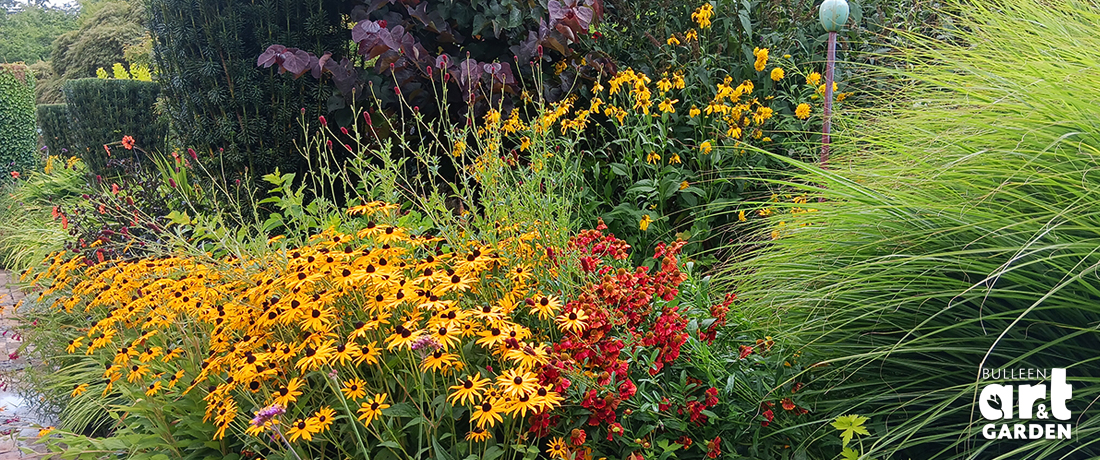
Design features that define a cottage garden are informality, density, and a harmonious mix of plants.
When we think of cottage gardens, we usually conjure up images of the quintessential English cottage garden associated with the countryside.
The origins of the cottage garden seem to be from the medieval period when peasants put herbs and flowers into limited spaces together in a relaxed and informal manner. These were functional plantings.
Over the different periods, the style has evolved to be more aesthetically pleasing. Plantings that include edibles are also still in vogue today – see our link to edible ornamental gardens.
The industrial revolution brought exotic plants from around the world into cottage gardens. In the 20th century, the Arts and Crafts movement influenced the design of cottage gardens and Gertrude Jekyll in particular played a huge role in shaping the cottage garden with her borders that took into account both colour and texture.
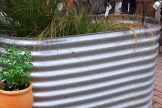
In the 21st century in Australia, we are starting to put our own spin on the cottage garden with the introduction of our own native plants and rusty pieces of art work.
The advantage of this informal style of gardening is that if a plant dies, it will not be so noticeable. If you do a native mix, it will be attractive to the good bugs in the garden, thus being a protective element in the garden. It is also likely that you will be providing nectar for birds and insects too. Above all, cottage gardens are interesting, colourful and pretty and thus, always engaging.
Where to begin
Remember, informality, density, and a harmonious mix of plants.
When starting a garden bed from scratch, first consider the colour scheme. Decide if you want a harmonious hot border, or cool border, or if you want opposite colours on the colour wheel to produce a riotous mix.
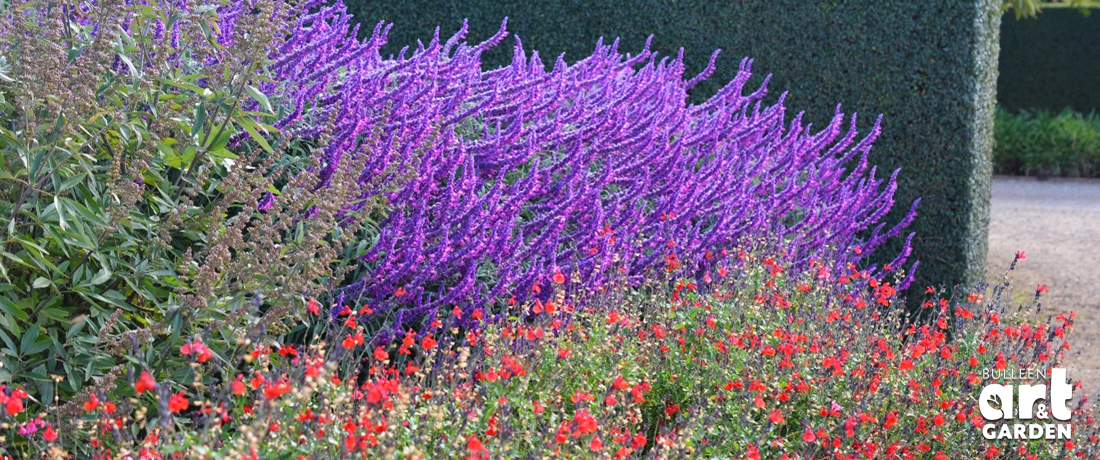
Next, think about the heights of the plants. Usually the tall plants will go towards the back of the bed, but there may be height in the middle of the length of bed too. The tall elements might be evergreen conifers, tall deciduous shrubs like Cotinus (see our web page on deciduous shrubs).
Repeated elements are key to holding everything together. This might be a colour, or a particular plant that is repeated.
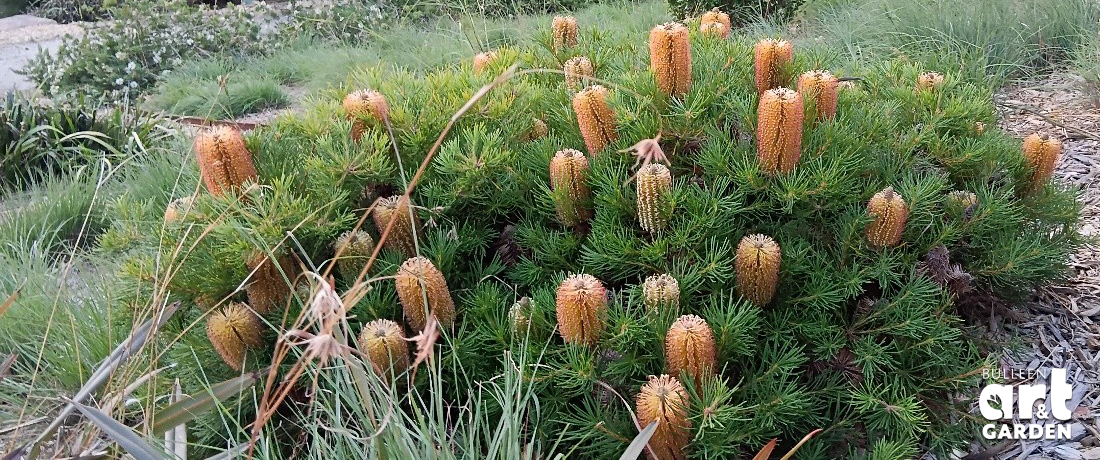
Decide if the cottage garden will be seasonal or if there will be colour all year round. In Melbourne, it is possible to get colour all year round. Rosemary, some Salvias, Aloes and Limonium will flower in winter. Many Australian natives do too – including Grevilleas, Banksia, Acacia, Hardenbergia and Correa just to name a few.
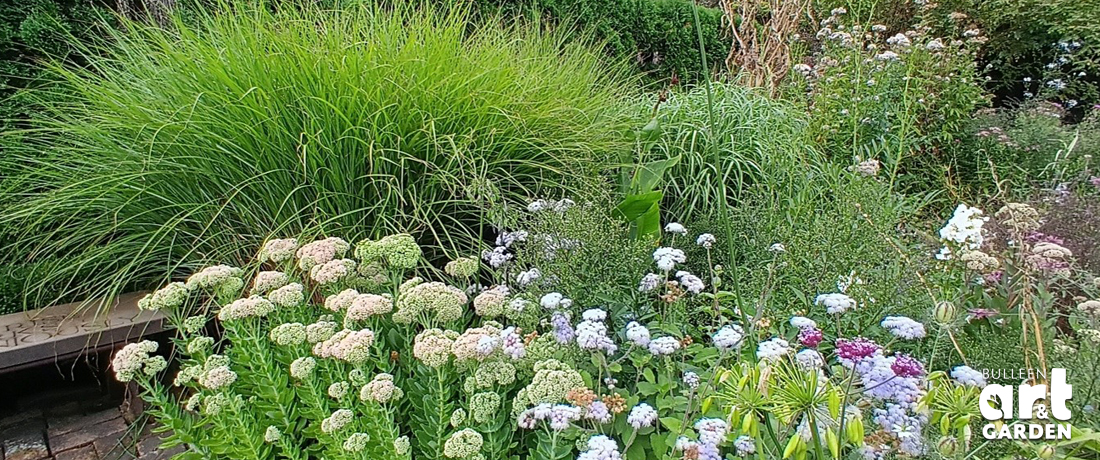
It is not all about colour – different textures add interest. Grasses and succulents play an important part in adding texture. Often grasses can look fabulous well into winter with their straw coloured foliage.
Make a list of all the plants you would like to include, this list may have to be distilled to simplify the planting to make it harmonious. Make a note of the heights and widths of the plants too. Make a scale drawing of the area to be planted, this will help you work out how many plants are needed. Don’t forget that plants grow, but a cottage garden is supposed to be densely planted.
Visit the nursery to look at plants. Take photos of the labels, foliage and flowers. Make final decisions about the plants you will use. Prepare the bed according to what plants you will be planting – for example, if you are planting Grevilleas and Banksias, you do not want to use general fertilise, but native fertilise. See our pages on soil health.
The availability of some plants is seasonal. You may have to plant in stages. Just put in garden stakes where you need to leave room for later plantings. Then, stand back, and enjoy the growth.