Have you ever wondered how to get out of mowing that bit of lawn that doesn’t belong to you? Or maybe you want to extend your front yard even further. Perhaps you want to turn a boring monoculture into something that is alive and attractive to wildlife, providing habitat and food?
Here is one recipe for turning a verge into a “nature strip.”
1 – Seek approval from your local council
Some councils won’t care about your renovation, while others have rules – always check your local council’s website for their requirements. Mine stipulates that nothing planted should be over 50cm tall, and there should be somewhere to put bins and a space for people to get out of their cars.
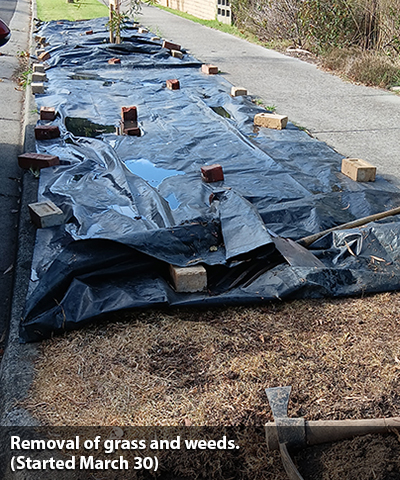
Removal of grass and weeds
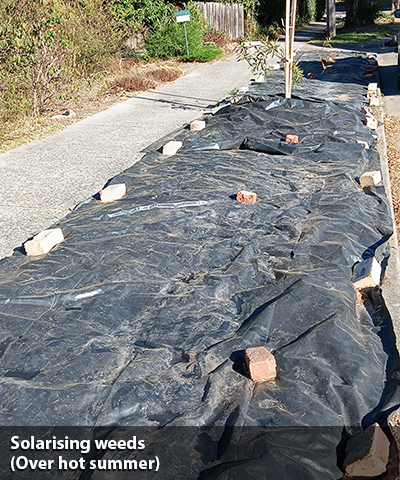
There are many ways to remove existing vegetation – I chose to solarise my area over the summer, which involved placing black plastic over the area and letting it heat up to kill the grass and weeds. Alternative methods could be spraying with herbicide or using a rotary hoe. I chose not to use a rotary hoe because I knew that running grass filled my strip, and the rotary hoe could cut the stolons into small pieces and spread them around, which I really didn’t want to happen. If you have couch grass, you might be better off spraying with a systemic herbicide.
2 – Removal of vegetation
As I had solarised, the dried vegetation remained below the plastic. At the edges the plants were somehow still alive, so I chose to use a mattock to remove them, paying particular attention to removing all the running grass and little bulbs I found throughout. This stage was painstaking and slow (it took months), but the upside was that I had lots of lovely conversations about the project with neighbours who were out for a walk.
3 – Soil Preparation
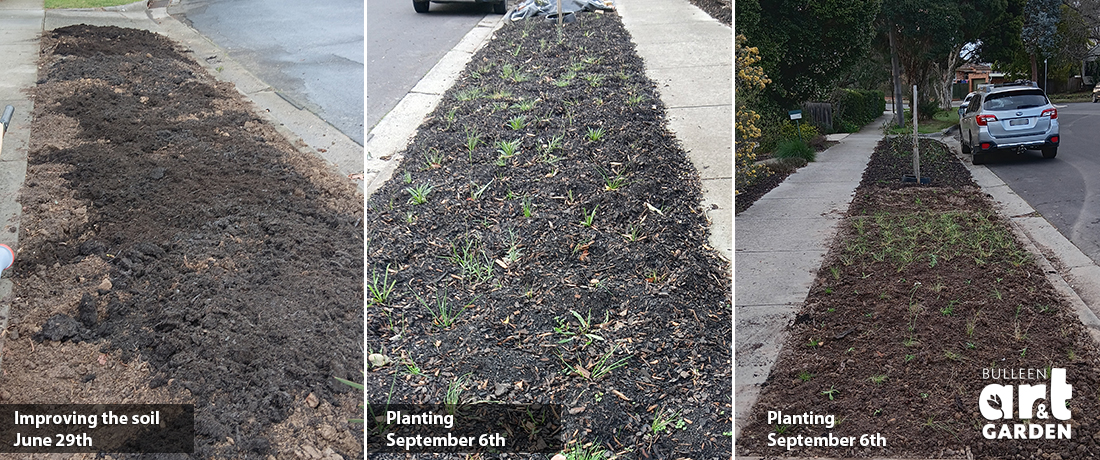
Once all the grass and weeds are removed, it is important to give your plants the best chance for success – good soil preparation is always worth it. What you are going to plant determines in part what you will use to improve the soil. I chose to add compost, a little manure, zeolite and Earth life Microbial Rock Minerals (the native blend), which I mixed through the existing soil.
4 – Planting up the bed
First, try to plant well before spring, ideally once the rain starts in autumn – this gives your plants the longest time to establish before the heat of the following summer. As well, plant tube stock rather than more advanced plants, as they establish more quickly, and the need to water will be less, further down the track. Second, choose plants that fulfil your council’s requirements. It is also a good idea to choose plants that won’t have to be watered (or at least watered frequently). I chose a mixture of local indigenous grasses and flowers, to give a wild meadow look.
5 – Watering
Watering in new plants is always important – new plantings should be watered in with a seaweed fertilizer or plant starter to initiate root growth, while local indigenous plants, being suited to the local conditions, should require less supplementary watering.
6 – Mulching
It is a great idea to mulch while it is still raining, ideally applied at a depth of 7.5-10cm. This will help with weed suppression, and reduce water loss from the soil. I also applied a layer of cardboard before I mulched to further help with weed suppression.
 |
|
|
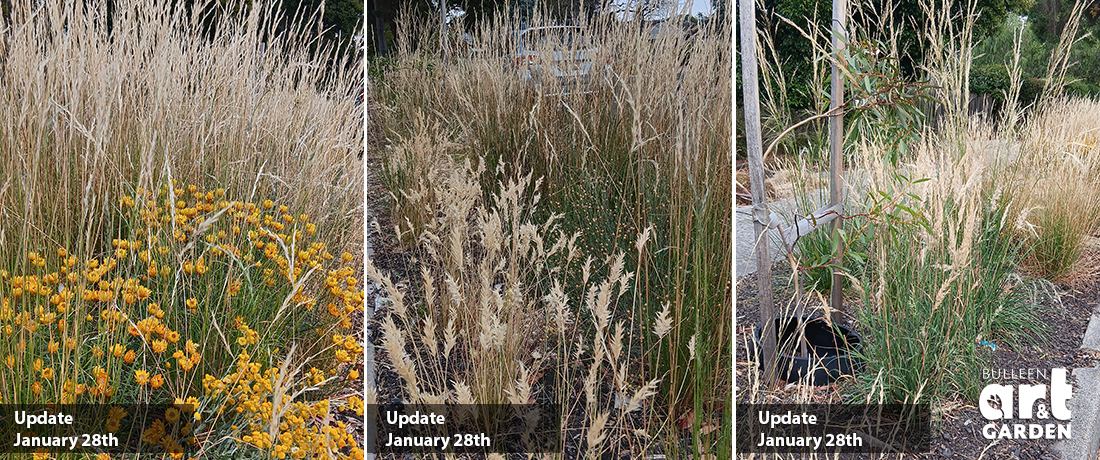
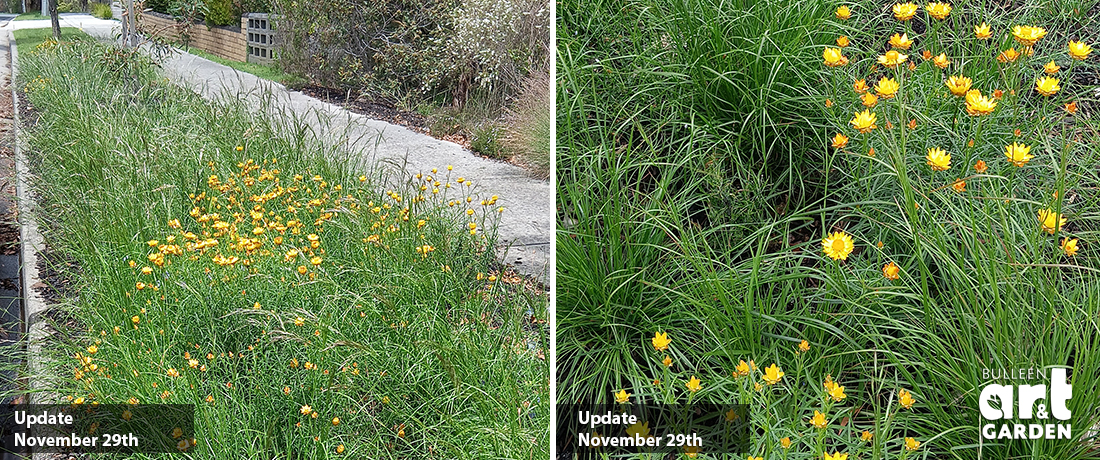
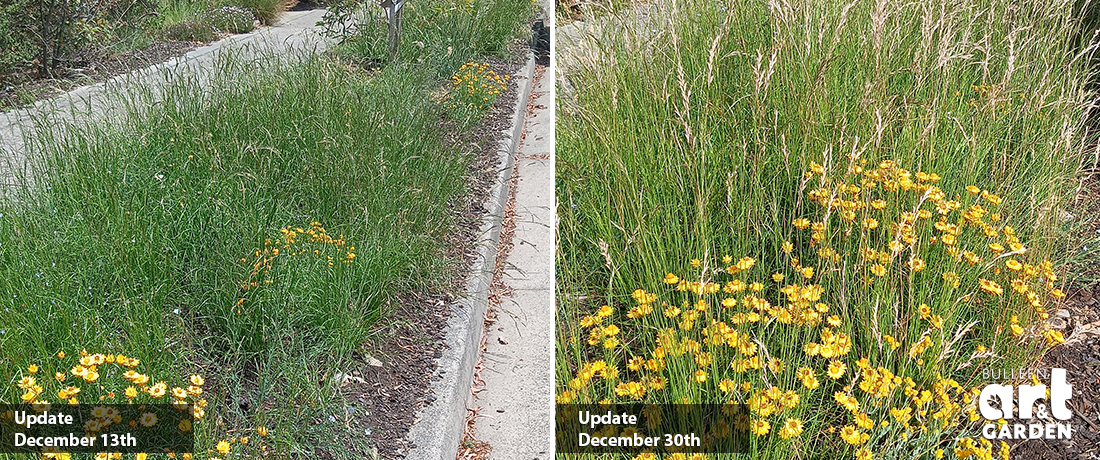
Despite the dry summer weather, I decided not to irrigate – I was keen to see how the plants would survive. Some plants, like the Microceris lanceolata (Murnong), are summer dormant and so have disappeared. I can tell that I have lost some of the flowers, but it will be interesting to see if they will come back once it starts to rain or if they have set seed. All the wallaby grasses, of which there are at least three different species, are doing very well.
I am very pleased with the results so far. A lot of grass seed has dropped, and I am hoping that once it starts to rain, these seeds will germinate to fill the gaps. Neighbours have been complimentary, there has been less lawn to mow, and the insects have been happy buzzing around. A win-win all round.